12-Jun-2025 | Market Research Store
The global alternative Proteins market was valued at approximately USD 3.94 billion in 2023 and is projected to reach an estimated USD 6.05 billion by 2032, demonstrating an impressive Compound Annual Growth Rate (CAGR) of 4.9% during the forecast period (2024-2032). This exponential growth trajectory underscores the escalating global demand for sustainable and ethically produced protein sources and the continuous innovation within this dynamic sector.
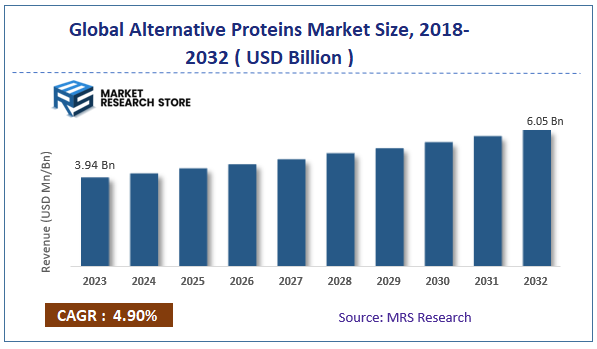
The global Alternative Proteins market is experiencing an unprecedented surge, poised to fundamentally reshape the global food system. Driven by escalating environmental concerns, growing ethical considerations regarding animal welfare, health-conscious consumer choices, and the imperative of food security for a burgeoning global population, alternative proteins are rapidly transitioning from niche products to mainstream dietary staples. This innovative sector encompasses a diverse range of protein sources designed to replace or complement traditional animal-derived proteins, offering solutions that are more sustainable, often healthier, and ethically appealing. A new, comprehensive market research report provides a detailed, step-by-step analysis of this transformative industry, offering invaluable insights for food manufacturers, ingredient suppliers, biotech companies, investors, and policymakers navigating the future of food.
For more information about the report or to inquire about purchasing, please visit: https://www.marketresearchstore.com/market-insights/alternative-proteins-market-829618
Market Definition
The Alternative Proteins market encompasses a broad category of protein sources that serve as substitutes or complements to traditional animal-derived proteins (meat, dairy, eggs, fish). These alternatives are developed to address environmental impacts, ethical concerns, and health considerations associated with conventional animal agriculture. The market for alternative proteins is broad and diverse, encompassing a range of innovative sources and technologies. Plant-based proteins are derived from various plants, including soy, pea, wheat, rice, nuts, seeds, and legumes. These proteins are processed into ingredients like isolates, concentrates, and flours or used directly in finished products such as plant-based meats, dairy alternatives, and egg substitutes. Another growing segment is insect proteins, which are sourced from edible insects like crickets, mealworms, and black soldier fly larvae, and are used in food, animal feed, and supplements.
Microbial proteins, produced through fermentation, include precision fermentation (where microorganisms like yeast or bacteria create specific proteins such as whey or casein) and biomass fermentation (which cultivates microorganisms to generate protein-rich biomass, such as mycoprotein). Cultivated meat, also known as cell-based meat, is another cutting-edge category, involving meat grown directly from animal cells in bioreactors without slaughter. Additionally, the market is expanding into emerging areas like algae-based proteins and hybrid products that blend traditional and alternative protein sources, reflecting ongoing innovation in sustainable food solutions.
Key Highlights from the Report
Market Size and Growth: The Alternative Proteins market is experiencing explosive growth, driven by a confluence of powerful trends. Environmental concerns over conventional livestock farming's contribution to greenhouse gas emissions, deforestation, and water consumption are pushing consumers and industries towards sustainable alternatives. Growing awareness of animal welfare issues and a shift towards more ethical food choices are significant drivers. Health considerations, including the desire to reduce red meat consumption, increase fiber intake, and manage cholesterol, also contribute to the appeal of plant-based and other alternative proteins. The expansion of flexitarian, vegetarian, and vegan diets globally is a major demand catalyst.
Consumer Preferences: Consumer preferences in the alternative protein market are rapidly evolving, with a shift from basic plant-based options to a greater emphasis on variety, taste, and functionality. Taste and texture parity with conventional meat and dairy remains a critical factor for mainstream adoption, as consumers expect alternatives to closely mimic the sensory experience of traditional products. Health and nutrition also play a key role, with demand for minimally processed, protein-rich foods that offer additional benefits, alongside popular claims like "clean label" and "free from" additives, hormones, or antibiotics. Sustainability and ethical considerations continue to drive choices, as consumers favor products with a lower environmental impact and strong animal welfare credentials.
The market is also seeing growing demand for innovation and variety, including diverse offerings in meat, dairy, seafood, and egg alternatives, as well as new formats like whole-cut plant-based meats. Affordability remains crucial, as price parity with conventional proteins will determine broader accessibility. Transparency about ingredient sourcing and production methods is increasingly important, as consumers seek trust and clarity in their food choices. Additionally, functional benefits—such as enhanced athletic performance or prolonged satiety—are becoming key selling points, reflecting a shift toward alternative proteins that do more than just replace animal-based foods.
Technological Innovations: The alternative proteins market is driving groundbreaking advancements in food science and biotechnology, with cutting-edge innovations shaping its future. Precision fermentation has emerged as a game-changer, allowing the production of "animal-identical" proteins like whey and casein without animal involvement—revolutionizing dairy and egg alternatives with authentic taste and functionality. Meanwhile, cellular agriculture is rapidly evolving, with researchers focusing on scaling cultivated meat production, reducing costs, and refining the taste, texture, and nutritional profile of lab-grown meat to rival conventional products.
In plant-based foods, high-moisture extrusion (HME) technology is enabling more realistic, fibrous textures that closely mimic meat, enhancing mouthfeel and consumer appeal. Scientists are also exploring novel plant protein sources—such as fava bean, chickpea, and potato protein—to improve functionality and reduce allergenicity compared to traditional soy and pea proteins. Biomass fermentation is gaining traction, using fungi and microorganisms to produce protein-rich ingredients like mycoprotein for versatile meat and dairy substitutes.
Additionally, flavor and aroma enhancement techniques are addressing "off-notes" in plant proteins, helping create more convincing alternative products. On the frontier of food tech, 3D printing is being leveraged to craft intricate, customized textures—particularly for whole-cut meat alternatives—showcasing the industry's commitment to innovation and realism. Together, these advancements are accelerating the shift toward sustainable, high-quality protein alternatives.
Market Segmentation: The global alternative proteins market is divided by product, application, and region. On the basis of Product, the global alternative proteins market is divided into plant protein, microbe-based protein, and insect protein. Plant Proteins currently dominate the market due to their established presence and consumer familiarity, but microbe-based protein and insect protein are projected to be the fastest-growing segments. Based on Application, the global alternative proteins market is bifurcated into food & beverages, infant formulations, clinical nutrients, animal feed, and others. The Food & Beverages segment held the largest market share. The infant formulations segment is expected to grow at a significant CAGR.
Regional Analysis: North America region currently holds the largest market share in the global alternative proteins market, driven by high consumer awareness, a strong presence of key innovative companies (e.g., Cargill Inc., Impossible Foods), significant venture capital investments, and a growing adoption of vegan and flexitarian diets. Asia Pacific region is projected to be the fastest-growing during the forecast period. Factors contributing to this rapid expansion include a large and growing population, increasing disposable incomes, rising concerns about food safety and environmental impact, and growing government support for sustainable food systems, particularly in countries like China and India. The cultural familiarity with plant-based diets in parts of Asia also provides a fertile ground for growth.
Europe is a substantial market, with strong consumer demand for plant-based products, driven by environmental consciousness, ethical considerations, and supportive regulatory environments in several countries. Germany and the UK are leading this trend. Latin America and the Middle East & Africa regions are exhibiting emerging growth, fueled by rising health awareness, increasing protein consumption, and efforts to diversify protein sources for food security.
Competitive Landscape: The global Alternative Proteins market is highly competitive and dynamic, featuring a mix of large multinational food and beverage corporations, established ingredient suppliers, and numerous innovative startups. Key players in the market include ADM, AGT Food and Ingredients, Axiom Foods Inc., Bunge Limited, Cargill Inc., Emsland Group, Glanbia plc, Impossible Foods Inc., Ingredion Inc., International Flavors & Fragrances Inc., Kerry Group, Lightlife Foods Inc., SunOpta Inc., Tate & Lyle PLC, and others. These companies are actively engaged in extensive R&D, product diversification, strategic partnerships, mergers and acquisitions, and aggressive marketing campaigns to expand their market reach, improve product offerings, and capture a larger share of this burgeoning market.
Sustainability Trends: Sustainability is a core driving force and an inherent characteristic of the alternative proteins market:
- Reduced Environmental Footprint: Alternative proteins generally require significantly less land, water, and emit fewer greenhouse gases compared to conventional animal agriculture. This is a primary selling point.
- Circular Economy Approaches: Utilizing agricultural by-products or waste streams as feedstocks for microbial fermentation.
- Resource Efficiency: Optimizing production processes to minimize energy and water consumption.
- Biodiversity Protection: Reducing the pressure on land use and animal habitats associated with industrial farming.
- Ethical Sourcing: Ensuring that plant-based ingredients are sourced sustainably and ethically, and that cultivated meat production minimizes animal involvement.
- Reduced Antibiotic Use: Alternative protein production largely bypasses the need for antibiotics commonly used in livestock, addressing concerns about antibiotic resistance.
Challenges and Opportunities
The Alternative Proteins market, while promising, faces certain challenges:
- Taste and Texture Discrepancy: Despite advancements, achieving perfect mimicry of conventional meat and dairy remains a challenge for some alternative protein products, hindering broader consumer acceptance.
- Cost Parity: Many alternative protein products, especially cultivated meat and some precision fermentation products, are currently more expensive than their conventional counterparts, making affordability a key barrier for mass adoption.
- Scaling Production: Scaling up novel production methods (e.g., cellular agriculture, precision fermentation) to meet mass-market demand efficiently and cost-effectively.
- Regulatory Hurdles and Labeling: Navigating complex and evolving regulatory landscapes in different countries for novel foods, especially for cultivated meat and insect proteins, and addressing labeling clarity.
- Consumer Perception and Education: Overcoming skepticism, misinformation, and resistance from consumers unfamiliar with new protein sources. Addressing concerns about "ultra-processed" foods for some plant-based alternatives.
- Allergenicity: Some popular plant proteins (e.g., soy, wheat, pea) are common allergens, requiring the development of diverse, allergen-free alternatives.
- Supply Chain Resilience: Ensuring robust and sustainable supply chains for novel ingredients and production inputs.
Despite these challenges, the market presents significant opportunities:
- Growing Global Population and Protein Demand: The increasing need for protein for a growing population, combined with finite land and water resources, positions alternative proteins as a crucial solution for food security.
- Rising Health and Wellness Trends: The increasing consumer focus on healthier diets, preventive nutrition, and sustainable living directly aligns with the benefits offered by alternative proteins.
- Investment and Innovation Ecosystem: Significant venture capital funding and a robust ecosystem of startups and research institutions are continuously driving technological breakthroughs.
- Expanded Application Areas: Beyond direct food consumption, opportunities lie in animal feed, pet food, and nutraceuticals, broadening the market scope.
- Collaboration and Partnerships: Increased collaboration between food tech companies, traditional food manufacturers, and ingredient suppliers to bring innovative products to market.
- Government Support and Policy: Growing recognition and support from governments worldwide for alternative protein research, development, and commercialization to achieve sustainability goals.
- Emerging Markets: Untapped potential in developing economies where rising incomes and environmental awareness are fostering new consumer behaviors.
Future Outlook
The global Alternative Proteins market is on a trajectory of phenomenal growth, driven by an urgent need for sustainable and resilient food systems. The future will see continued innovation in taste, texture, and nutritional profiles, making alternative proteins indistinguishable from, or even superior to, their conventional counterparts. As production scales up and costs come down, alternative proteins are poised to become a mainstream choice for consumers globally. The market will increasingly focus on diverse protein sources, personalized nutrition, and a seamless integration of these novel foods into daily diets, fundamentally transforming how humanity feeds itself in a more environmentally conscious and ethical manner.
About Us
Market Research Store is a single destination for all types of industries, global, and regional reports. We feature large repository of latest industry reports and market statistics published by reputed private publishers and public organizations. Market Research Store is the comprehensive collection of market intelligence products and services available. Our vast database of reports enables our clients to benefit from expert insights on global industries, products, and market trends.
Contact Us
Market Research Store
244 Fifth Avenue, Suite N202
New York, 10001, United States
Tel: +1-302-444-0166
USA/Canada Toll Free No.+1 (855) 465-4651
Email: sales@marketresearchstore.com
Website: www.marketresearchstore.com