Hydrolyzed Plant Protein Market Size, Share, and Trends Analysis Report
CAGR :

| Market Size 2023 (Base Year) | USD 1782.3 Million |
| Market Size 2032 (Forecast Year) | USD 3128.82 Million |
| CAGR | 5.8% |
| Forecast Period | 2024 - 2032 |
| Historical Period | 2018 - 2023 |
Hydrolyzed Plant Protein Market Insights
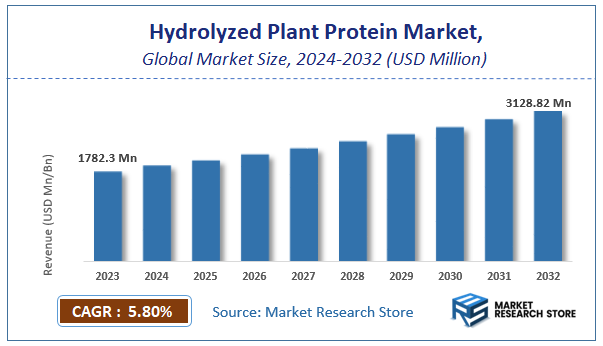
According to Market Research Store, the global hydrolyzed plant protein market size was valued at around USD 1782.3 million in 2023 and is estimated to reach USD 3128.82 million by 2032, to register a CAGR of approximately 5.80% in terms of revenue during the forecast period 2024-2032.
The hydrolyzed plant protein report provides a comprehensive analysis of the market, including its size, share, growth trends, revenue details, and other crucial information regarding the target market. It also covers the drivers, restraints, opportunities, and challenges till 2032.
To Get more Insights, Request a Free Sample
Global Hydrolyzed Plant Protein Market: Overview
Hydrolyzed plant protein (HPP) is a form of plant-derived protein that has undergone hydrolysis, a chemical process where proteins are broken down into smaller peptides and amino acids. This enhances the protein's digestibility, bioavailability, and functional properties, making it ideal for various food, beverage, and cosmetic applications. HPP is typically sourced from plants like soy, wheat, peas, rice, and other legumes, making it a popular choice among vegan, vegetarian, and allergen-conscious consumers. Its versatile nature allows it to act as a flavor enhancer, texturizer, or nutritional booster in products like soups, sauces, snacks, and protein supplements.
Key Highlights
- The hydrolyzed plant protein market is anticipated to grow at a CAGR of 5.80% during the forecast period.
- The global hydrolyzed plant protein market was estimated to be worth approximately USD 1782.3 million in 2023 and is projected to reach a value of USD 3128.82 million by 2032.
- The growth of the hydrolyzed plant protein market is being driven by rising consumer demand for plant-based, clean-label, and sustainable food products.
- Based on the type, the soy plant protein segment is growing at a high rate and is projected to dominate the market.
- On the basis of form, the powder segment is projected to swipe the largest market share.
- In terms of application, the food & beverages segment is expected to dominate the market.
- By region, North America is expected to dominate the global market during the forecast period.
Hydrolyzed Plant Protein Market: Dynamics
Key Growth Drivers:
- Rising demand for plant-based diets: Growing consumer awareness of health benefits and ethical concerns related to animal agriculture is driving a shift towards plant-based protein sources.
- Increased focus on health and wellness: Hydrolyzed plant proteins offer several health benefits, including improved digestibility, enhanced bioavailability, and potential for better muscle protein synthesis.
- Growing popularity of sports nutrition: These proteins are widely used in sports nutrition products due to their rapid absorption and ability to support muscle recovery.
- Expanding applications in food and beverage: Hydrolyzed plant proteins find increasing use in various food and beverage products, such as dairy alternatives, meat analogs, and protein bars.
Restraints:
- Higher production costs: The hydrolysis process can be energy-intensive, leading to increased production costs compared to some other protein sources.
- Potential for off-flavors: Hydrolysis can sometimes result in undesirable off-flavors that may require additional processing steps to mitigate.
- Allergenicity concerns: Some plant-based proteins, such as soy and nuts, can be allergenic, which may limit their use in certain applications.
Opportunities:
- Innovation in product development: Ongoing research and development efforts are focused on developing new and improved hydrolyzed plant proteins with enhanced functionalities and reduced production costs.
- Exploration of new applications: Expanding the use of hydrolyzed plant proteins into new areas, such as pharmaceuticals and nutraceuticals, presents significant market opportunities.
- Customization for specific needs: Tailoring protein hydrolysates to meet specific nutritional and functional requirements of different consumer groups can create new market niches.
Challenges:
- Maintaining consistent quality: Ensuring consistent quality and functionality of hydrolyzed plant proteins across different production batches can be challenging.
- Meeting consumer demand for transparency and sustainability: Consumers are increasingly demanding information about the origin and sustainability of their food. Meeting these demands requires transparent and sustainable sourcing practices.
- Competition from other protein sources: Hydrolyzed plant proteins face competition from other protein sources, such as whey protein and animal-based proteins, which may have established market positions.
Hydrolyzed Plant Protein Market: Report Scope
| Report Attributes | Report Details |
|---|---|
| Report Name | Hydrolyzed Plant Protein Market |
| Market Size in 2023 | USD 1782.3 Million |
| Market Forecast in 2032 | USD 3128.82 Million |
| Growth Rate | CAGR of 5.8% |
| Number of Pages | 140 |
| Key Companies Covered | Kerry, Tate & Lyle, Cargill Incorporated, Archer Daniels Midland Company, Roquette Frères, Griffith Foods, Kelisema, PEVESA, FrieslandCampina Ingredients, New Alliance Dye Chem, A. Costantino & C., MGP, Ajinomoto Philippines Corporation, Astron Limited, Aarkay Food Products |
| Segments Covered | By Product Type, By Application, and By Region |
| Regions Covered | North America, Europe, Asia Pacific (APAC), Latin America, Middle East, and Africa (MEA) |
| Base Year | 2023 |
| Historical Year | 2018 to 2023 |
| Forecast Year | 2024 to 2032 |
| Customization Scope | Avail customized purchase options to meet your exact research needs. Request For Customization |
Hydrolyzed Plant Protein Market: Segmentation Insights
The global hydrolyzed plant protein market is divided by type, form, application, and region.
Segmentation Insights by Type
Based on type, the global hydrolyzed plant protein market is divided into soy plant protein, rice plant protein, pea plant protein, wheat plant protein, and others.
Soy Plant Protein is the most dominant segment in the hydrolyzed plant protein market. Its dominance can be attributed to its high protein content, affordability, and widespread availability. Soy protein is extensively used in various applications, including food and beverages, dietary supplements, and animal feed. Its ability to provide a complete amino acid profile makes it a popular choice for consumers seeking plant-based protein sources. Additionally, its functional properties, such as emulsification and water-binding, enhance its use in processed foods and beverages.
Rice Plant Protein holds the second position in the market due to its hypoallergenic nature and high digestibility. It is commonly used in specialized dietary products such as infant formulas, protein powders, and gluten-free foods. The rising demand for allergen-free and gluten-free products has propelled the growth of rice protein, especially among health-conscious consumers and those with dietary restrictions.
Pea Plant Protein is gaining significant traction due to its sustainability and nutritional benefits. Rich in essential amino acids, iron, and fiber, pea protein is increasingly used in vegan and vegetarian food products, including meat and dairy alternatives. Its neutral taste and allergen-free profile contribute to its growing popularity, particularly in regions with high demand for plant-based foods.
Wheat Plant Protein is a well-established segment but ranks lower due to its gluten content, which limits its usage among consumers with gluten sensitivity or celiac disease. However, wheat protein is widely used in bakery and processed food products for its binding properties and ability to enhance texture.
Segmentation Insights by Form
On the basis of form, the global hydrolyzed plant protein market is bifurcated into powder, liquid, and other.
Powder form is the most dominant segment in the hydrolyzed plant protein market, driven by its convenience, versatility, and long shelf life. Powdered hydrolyzed plant proteins are widely used in food and beverage applications, including protein shakes, meal replacements, and baking products. They dissolve easily in liquids, making them a preferred choice for manufacturers of ready-to-mix products. Additionally, the powder form is cost-effective for transportation and storage, further solidifying its dominance in the market.
Liquid form holds the second position, largely used in applications where ease of incorporation into formulations is essential, such as beverages, sauces, and soups. Liquid hydrolyzed plant proteins offer better solubility and blending properties, making them suitable for specific processing requirements. This form is particularly popular in the beverage industry, where it is used to create plant-based protein drinks and other fortified products.
Segmentation Insights by Application
In terms of application, the global hydrolyzed plant protein market is categorized into food & beverages, cosmetic & personal care, sports nutrition, animal feed, and others.
Food & Beverages is the most dominant segment in the hydrolyzed plant protein market. The increasing demand for plant-based and vegan products has propelled the use of hydrolyzed plant proteins in various food and beverage applications. They are widely used in meat alternatives, dairy substitutes, soups, sauces, and snacks due to their ability to improve texture, enhance flavor, and boost protein content. The rising health-conscious consumer base and preference for sustainable food options further drive this segment's dominance.
Sports Nutrition holds the second position, driven by the growing popularity of fitness and wellness trends. Hydrolyzed plant proteins are extensively used in protein powders, energy bars, and ready-to-drink protein shakes. Their fast absorption rate and high amino acid content make them an ideal choice for athletes and fitness enthusiasts. The shift toward plant-based diets among athletes has further accelerated the adoption of hydrolyzed plant proteins in this segment.
Cosmetic & Personal Care represents a growing segment, as hydrolyzed plant proteins are increasingly used in skincare and haircare products. These proteins are valued for their moisturizing, anti-aging, and hair-strengthening properties. Their inclusion in shampoos, conditioners, lotions, and serums is becoming more common as consumers seek natural and sustainable ingredients in personal care products.
Animal Feed is another significant segment, with hydrolyzed plant proteins being used as an alternative to traditional protein sources like soy and fishmeal. They are incorporated into animal feed formulations for pets, poultry, and livestock to provide essential nutrients and improve growth performance. The focus on sustainable and high-quality feed ingredients is driving the adoption of hydrolyzed plant proteins in this application.
Hydrolyzed Plant Protein Market: Regional Insights
- North America is expected to dominates the global market
North America leads the market due to the growing adoption of plant-based diets and increasing health consciousness among consumers. The region’s advanced food and beverage industry incorporates hydrolyzed plant proteins into a wide range of products, including dairy alternatives, snacks, bakery items, and nutritional supplements. Innovations in clean-label products and sustainability-focused ingredients further drive growth in this region.
Europe follows closely, supported by the rising popularity of vegetarian and vegan lifestyles, along with stringent regulations promoting sustainable and healthy food practices. The demand for hydrolyzed plant proteins is particularly high in functional foods, such as plant-based meat analogs, sports nutrition, and fortified beverages. The region’s emphasis on R&D has enabled manufacturers to develop innovative formulations that cater to evolving consumer preferences.
Asia Pacific is witnessing significant growth due to a large vegetarian population, increasing disposable incomes, and urbanization. Countries like China, India, and Japan are key contributors, with growing demand for plant-based protein ingredients in convenience foods, beverages, and dietary supplements. The region's dynamic food and beverage sector, coupled with heightened health awareness, provides ample opportunities for market expansion.
The Middle East and Africa, along with Latin America, are emerging markets for hydrolyzed plant proteins. Increasing health awareness, rising disposable incomes, and expanding retail networks for wellness products are driving demand. Consumers in these regions are gradually shifting towards plant-based protein sources, leading to broader application of hydrolyzed plant proteins in food and beverage products. Market players are focusing on product innovation, partnerships, and strategic marketing to tap into the potential of these growing markets.
Hydrolyzed Plant Protein Market: Competitive Landscape
The report provides an in-depth analysis of companies operating in the hydrolyzed plant protein market, including their geographic presence, business strategies, product offerings, market share, and recent developments. This analysis helps to understand market competition.
Some of the major players in the global hydrolyzed plant protein market include:
- Kerry
- Tate & Lyle
- Cargill Incorporated
- Archer Daniels Midland Company
- Roquette Frères
- Griffith Foods
- Kelisema
- PEVESA
- FrieslandCampina Ingredients
- New Alliance Dye Chem
- A. Costantino & C.
- MGP
- Ajinomoto Philippines Corporation
- Astron Limited
- Aarkay Food Products
The global hydrolyzed plant protein market is segmented as follows:
By Type
- Soy Plant Protein
- Rice Plant Protein
- Pea Plant Protein
- Wheat Plant Protein
- Others
By Form
- Powder
- Liquid
- Other
By Application
- Food And Beverages
- Cosmetic And Personal Care
- Sports Nutrition
- Animal Feed
- Others
By Region
- North America
- U.S.
- Canada
- Europe
- U.K.
- France
- Germany
- Rest of Europe
- Asia Pacific
- China
- Japan
- India
- South Korea
- Rest of Asia Pacific
- Latin America
- Brazil
- Rest of Latin America
- The Middle East and Africa
- GCC Countries
- South Africa
- Rest of Middle East Africa
Frequently Asked Questions
Based on statistics from the Market Research Store, the global hydrolyzed plant protein market size was projected at approximately US$ 1782.3 million in 2023. Projections indicate that the market is expected to reach around US$ 3128.82 million in revenue by 2032.
The global hydrolyzed plant protein market is expected to grow at a Compound Annual Growth Rate (CAGR) of around 5.80% during the forecast period from 2024 to 2032.
North America is expected to dominate the global hydrolyzed plant protein market.
The significant factors driving the global hydrolyzed plant protein market include the rising adoption of plant-based diets, increasing health and wellness awareness, growing demand for clean-label and sustainable products, and the expanding use of plant proteins in functional foods, beverages, and dietary supplements.
Some of the prominent players operating in the global hydrolyzed plant protein market are; Kerry, Tate & Lyle, Cargill Incorporated, Archer Daniels Midland Company, Roquette Frères, Griffith Foods, Kelisema, PEVESA, FrieslandCampina Ingredients, New Alliance Dye Chem, A. Costantino & C., MGP, Ajinomoto Philippines Corporation, Astron Limited, Aarkay Food Products, and others.
Table Of Content
Inquiry For Buying
Hydrolyzed Plant Protein
Request Sample
Hydrolyzed Plant Protein
