Lignosulfonates Market Size, Share, and Trends Analysis Report
CAGR :

| Market Size 2023 (Base Year) | USD 1242.24 Million |
| Market Size 2032 (Forecast Year) | USD 1695.99 Million |
| CAGR | 3.52% |
| Forecast Period | 2024 - 2032 |
| Historical Period | 2018 - 2023 |
Lignosulfonates Market Insights
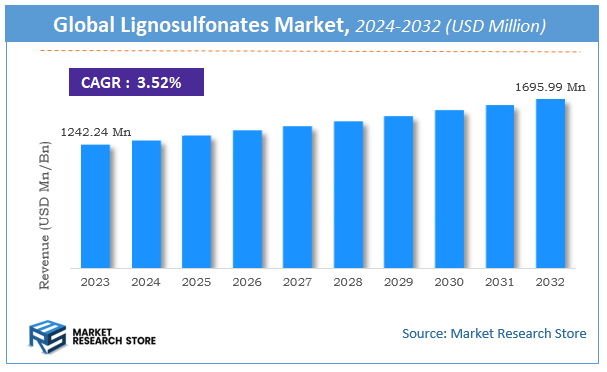
According to Market Research Store, the global lignosulfonates market size was valued at around USD 1242.24 million in 2023 and is estimated to reach USD 1695.99 million by 2032, to register a CAGR of approximately 3.52% in terms of revenue during the forecast period 2024-2032.
The lignosulfonates report provides a comprehensive analysis of the market, including its size, share, growth trends, revenue details, and other crucial information regarding the target market. It also covers the drivers, restraints, opportunities, and challenges till 2032.
To Get more Insights, Request a Free Sample
Global Lignosulfonates Market: Overview
The Lignosulfonates Market involves the use of lignosulfonates, which are water-soluble by-products of the sulfite pulping process of wood. These compounds have a wide range of applications in industries such as construction, agriculture, and chemical processing. Lignosulfonates are primarily used as dispersants, binders, and stabilizers in products like concrete admixtures, ceramic formulations, and as a binding agent in animal feed. They are also employed in dust control, wastewater treatment, and as a dispersing agent in various industrial processes.
The market growth is driven by the increasing demand for environmentally friendly and sustainable alternatives in industries like construction and agriculture. Lignosulfonates are considered eco-friendly due to their renewable nature, being derived from wood and other plant-based materials. The growing trend toward green and sustainable products is pushing the demand for lignosulfonates, particularly in the construction industry for concrete admixtures, where they help improve the quality and durability of concrete.
Key Highlights
- The lignosulfonates market is anticipated to grow at a CAGR of 3.52% during the forecast period.
- The global lignosulfonates market was estimated to be worth approximately USD 1242.24 million in 2023 and is projected to reach a value of USD 1695.99 million by 2032.
- The growth of the lignosulfonates market is being driven by the increasing demand for eco-friendly and sustainable products across various industries.
- Based on the product, the calcium lignosulfonates segment is growing at a high rate and is projected to dominate the market.
- On the basis of application, the construction segment is projected to swipe the largest market share.
- By region, North America is expected to dominate the global market during the forecast period.
Lignosulfonates Market: Dynamics
Key Growth Drivers
- Expanding Construction Industry: Lignosulfonates are widely used as concrete admixtures (plasticizers and superplasticizers) to improve workability, strength, and durability of concrete. The booming construction sector globally is driving demand for these additives.
- Growing Demand for Sustainable Solutions: Lignosulfonates are derived from a renewable source (lignin from the paper industry) making them an environmentally friendly alternative to petroleum-based chemicals. This aligns with the increasing focus on sustainability and green building practices.
- Animal Feed Applications: Lignosulfonates are used as feed additives to improve animal feed digestibility, enhance nutrient absorption, and promote gut health.
- Applications in Agriculture: Lignosulfonates are used as soil conditioners, dispersants in agrochemicals, and in the production of bio-based fertilizers.
Restraints
- Price Volatility of Raw Materials: The price of lignosulfonates can fluctuate significantly due to variations in the cost of wood pulp and the overall pulp and paper market.
- Competition from Synthetic Alternatives: Lignosulfonates face competition from synthetic chemicals like polycarboxylate ethers, which may offer improved performance in some applications.
- Environmental Concerns Related to Production: While a renewable resource, the production of lignosulfonates can have environmental impacts, such as wastewater treatment challenges and potential emissions.
- Limited Market Awareness: In some niche applications, awareness and understanding of the benefits and versatility of lignosulfonates among potential customers may be limited.
Opportunities
- Development of High-Performance Lignosulfonates: Research and development efforts are focused on developing lignosulfonates with enhanced properties, such as improved dispersing ability, reduced viscosity, and better compatibility with other additives.
- Exploration of New Applications: Research and development are ongoing to explore new and emerging applications for lignosulfonates, such as in biocomposites, drug delivery, and water treatment.
- Collaboration with Industry Stakeholders: Collaboration between lignosulfonate producers, end-users, and researchers can drive innovation, improve product quality, and expand market reach.
- Promoting Sustainability and Circular Economy: Highlighting the environmental benefits of lignosulfonates and promoting their use within a circular economy framework can enhance their market appeal.
Challenges
- Maintaining Consistent Product Quality: Ensuring consistent product quality and performance across different production batches and sources of lignin can be challenging.
- Meeting Increasing Regulatory Requirements: Compliance with evolving environmental regulations and ensuring product safety can pose challenges for lignosulfonate manufacturers.
- Developing Sustainable Sourcing Practices: Ensuring the sustainable sourcing of wood pulp used for lignosulfonate production is crucial for the long-term viability of the market.
- Educating End-Users: Effectively communicating the benefits and applications of lignosulfonates to end-users is crucial for market penetration and growth.
Lignosulfonates Market: Report Scope
| Report Attributes | Report Details |
|---|---|
| Report Name | Lignosulfonates Market |
| Market Size in 2023 | USD 1242.24 Million |
| Market Forecast in 2032 | USD 1695.99 Million |
| Growth Rate | CAGR of 3.52% |
| Number of Pages | 140 |
| Key Companies Covered | Borregaard, Burgo, Rayonier Advanced Materials, Wuhan Xinyingda Chemicals, Shenyang Xingzhenghe Chemical, Abelin Polymers, Greenagrochem, Harbin Fecino Chemical, Karjala Pulp, Nippon Paper |
| Segments Covered | By Product Type, By Application, and By Region |
| Regions Covered | North America, Europe, Asia Pacific (APAC), Latin America, Middle East, and Africa (MEA) |
| Base Year | 2023 |
| Historical Year | 2018 to 2023 |
| Forecast Year | 2024 to 2032 |
| Customization Scope | Avail customized purchase options to meet your exact research needs. Request For Customization |
Lignosulfonates Market: Segmentation Insights
The global lignosulfonates market is divided by product, application, and region.
Segmentation Insights by Product
Based on Product, the global lignosulfonates market is divided into calcium lignosulfonates, sodium lignosulfonates, magnesium lignosulfonates, and others.
The calcium lignosulfonates segment holds a significant share in the Lignosulfonates Market, primarily due to its widespread use in applications such as concrete admixtures, dust control, and animal feed. Calcium lignosulfonates are highly valued for their ability to enhance the workability of concrete and improve its strength, making them a popular choice in the construction industry. They are also used in various industrial applications as dispersants and binders, owing to their excellent water solubility and binding properties. Additionally, calcium lignosulfonates are utilized in agriculture for animal feed supplements and as a plant growth stimulant. The segment benefits from the increasing demand for sustainable construction materials and natural additives, further driving its growth.
The sodium lignosulfonates segment is another key player in the Lignosulfonates Market, known for its versatility and widespread industrial use. Sodium lignosulfonates are commonly used in the production of concrete, ceramics, and detergents due to their excellent dispersing, wetting, and emulsifying properties. In addition, they are used in the paper and pulp industry as binders and dispersants in the production of high-quality paper. Sodium lignosulfonates are also used in the oil and gas industry for well drilling and fluid treatment, where their ability to stabilize drilling fluids and reduce friction is highly valued. As demand for environmentally friendly and multifunctional chemicals increases, sodium lignosulfonates are expected to see continued growth, particularly in the construction, paper, and oil sectors.
The magnesium lignosulfonates segment, while smaller than calcium and sodium lignosulfonates, is growing steadily due to its unique applications in agriculture and industrial processes. Magnesium lignosulfonates are used as a dispersing agent and wetting agent in various applications, including agriculture for pesticide formulations and in animal feed. Their ability to improve nutrient absorption in plants and animals makes them valuable in sustainable farming practices. Additionally, magnesium lignosulfonates are used in the production of environmentally friendly chemicals, where their biodegradable nature and low toxicity make them an attractive option. The segment is expected to grow as the demand for sustainable agricultural and industrial chemicals increases.
Segmentation Insights by Application
On the basis of Application, the global lignosulfonates market is bifurcated into construction, ceramics, chemicals, oil & gas, and animal feed additives industries.
The construction application segment is the largest and fastest-growing in the Lignosulfonates Market, primarily due to the widespread use of lignosulfonates in concrete admixtures. Calcium and sodium lignosulfonates are used to improve the workability, strength, and durability of concrete, making them essential in the construction of buildings, roads, bridges, and other infrastructure projects. Lignosulfonates also act as water-reducing agents, helping to achieve stronger and more durable concrete while reducing water content in the mix. With the increasing demand for sustainable and high-performance construction materials, the use of lignosulfonates in concrete formulations is expected to continue to rise, driving growth in the construction industry.
The ceramics application segment is a significant driver in the Lignosulfonates Market, owing to the dispersing and binding properties of lignosulfonates, particularly sodium lignosulfonates. These properties make lignosulfonates essential in the ceramics industry, where they are used as plasticizers and dispersants in the production of clay, porcelain, and other ceramic materials. Lignosulfonates help improve the workability, consistency, and flow properties of ceramic slurries, which enhances the quality of finished products. As the demand for high-quality and sustainable ceramics grows, particularly in the construction and decorative sectors, lignosulfonates are becoming more crucial in ceramic formulations.
The chemicals application segment is another major contributor to the Lignosulfonates Market, where lignosulfonates are used as dispersants, emulsifiers, and stabilizers in various chemical formulations. Sodium lignosulfonates, in particular, are widely used in the production of detergents, dyes, and pigments due to their excellent solubility and dispersing properties. Additionally, lignosulfonates are used as raw materials in the synthesis of other chemicals, such as surfactants and lubricants. As industries seek more sustainable and eco-friendly alternatives to traditional chemical additives, the demand for lignosulfonates in chemical manufacturing is expected to grow, particularly in industries focused on green chemistry and natural products.
The oil & gas application segment is another important area for lignosulfonates, particularly sodium lignosulfonates, which are used in the oil drilling industry as additives in drilling fluids. Lignosulfonates are added to drilling muds to improve their viscosity, reduce friction, and stabilize the fluid. This helps enhance the efficiency of drilling operations and the overall performance of the oil and gas exploration process. The growing demand for oil and gas exploration and extraction, combined with the need for more efficient and environmentally friendly drilling techniques, is driving the increased use of lignosulfonates in the oil and gas sector.
The animal feed additives application segment is emerging as a promising area for lignosulfonates, particularly calcium lignosulfonates. Lignosulfonates are used as binders and nutritional supplements in animal feed, improving the quality and digestibility of the feed. They help enhance the absorption of nutrients and improve the overall health of livestock. As the demand for high-quality animal feed and sustainable farming practices grows, lignosulfonates are gaining popularity in the agriculture and livestock industries. This segment is expected to expand as more animal feed manufacturers look for natural and cost-effective additives to improve feed formulations.
Lignosulfonates Market: Regional Insights
- North America currently leads the global lignosulfonates market
North America is one of the largest markets for lignosulfonates, particularly in the United States, where the demand for eco-friendly additives in industries like construction, agriculture, and mining is increasing. Lignosulfonates are widely used as dispersants in concrete and cement, where they improve the workability and flowability of the mixture. In agriculture, they are used as soil conditioners and in the formulation of fertilizers. The U.S. market benefits from a well-established infrastructure for the production and distribution of lignosulfonates, as well as a growing emphasis on sustainable construction and eco-friendly products. Additionally, the adoption of lignosulfonates in emerging sectors, such as energy and water treatment, further contributes to market growth.
Europe holds a significant share of the lignosulfonates market, driven by the strong demand for lignosulfonates in construction, agriculture, and animal feed sectors. European countries such as Germany, the UK, and France are major consumers of lignosulfonates due to their extensive use in the production of high-performance concrete, where lignosulfonates improve the flowability and strength of the material. The growing demand for bio-based and sustainable solutions in agriculture is also driving the use of lignosulfonates as surfactants and dispersants in pesticide formulations and fertilizers. Furthermore, the European Union’s stringent environmental regulations have encouraged the shift toward natural and eco-friendly chemicals, boosting the lignosulfonates market.
The Asia-Pacific region is experiencing rapid growth in the lignosulfonates market, particularly in countries like China, India, and Japan. The growing construction industry, especially in emerging economies like China and India, is one of the key drivers of demand for lignosulfonates as concrete additives. Additionally, the agriculture sector in this region is adopting lignosulfonates for use in fertilizers and soil conditioning due to their ability to enhance nutrient absorption and improve soil health. In countries like Japan, lignosulfonates are also used in water treatment applications, where their dispersing properties help in purifying water. The increasing adoption of lignosulfonates as a sustainable, cost-effective alternative to synthetic chemicals is driving growth in this region.
Latin America is an emerging market for lignosulfonates, with growing demand from countries like Brazil, Mexico, and Argentina. The construction industry in Latin America, particularly in Brazil, is expanding rapidly, leading to an increased need for high-performance concrete additives. Lignosulfonates are also gaining traction in the agriculture sector, where they are used to improve fertilizer formulations and as soil conditioners to boost crop yields. As awareness of the environmental and economic benefits of lignosulfonates increases, the demand for these compounds is expected to grow across various industries in the region. However, the market is still developing, with growth largely dependent on the expansion of infrastructure and agricultural activities.
The Middle East and Africa (MEA) region is witnessing gradual growth in the lignosulfonates market, driven by demand from construction and agriculture industries. In the Middle East, countries like Saudi Arabia and the UAE are investing heavily in infrastructure development, increasing the need for efficient concrete additives such as lignosulfonates. In Africa, the use of lignosulfonates in agriculture is gaining traction, particularly in the formulation of fertilizers and soil conditioning agents. The region’s focus on sustainable agricultural practices and eco-friendly construction materials is expected to support the continued growth of the lignosulfonates market.
Recent Developments:
- In October 2020, In South Africa, Borregaard and Sappi Group, the proprietors of Lignotech South Africa, have elected to cease lignin production.
- In June 2018, a joint venture for the production of lignin in Florida was established by Borregaard and Rayonier Advanced Materials.
- In March 2017, the global sales of Hansa lignin products were to be increased by Sappi Limited through an agreement with Cellmark.
Lignosulfonates Market: Competitive Landscape
The report provides an in-depth analysis of companies operating in the lignosulfonates market, including their geographic presence, business strategies, product offerings, market share, and recent developments. This analysis helps to understand market competition.
Some of the major players in the global lignosulfonates market include:
- Abelin Polymers
- Borregaard
- Burgo
- Greenagrochem
- Harbin Fecino Chemical
- Karjala Pulp
- Nippon Paper
- Rayonier Advanced Materials
- Shenyang Xingzhenghe Chemical
- Wuhan Xinyingda Chemicals
The global lignosulfonates market is segmented as follows:
By Product
- Calcium Lignosulfonates
- Sodium Lignosulfonates
- Magnesium Lignosulfonates
- Others
By Application
- Construction
- Ceramics
- Chemicals
- Oil & Gas
- Animal Feed Additives Industries
By Region
- North America
- U.S.
- Canada
- Europe
- U.K.
- France
- Germany
- Rest of Europe
- Asia Pacific
- China
- Japan
- India
- South Korea
- Rest of Asia Pacific
- Latin America
- Brazil
- Rest of Latin America
- The Middle East and Africa
- GCC Countries
- South Africa
- Rest of Middle East Africa
Frequently Asked Questions
Based on statistics from the Market Research Store, the global lignosulfonates market size was projected at approximately US$ 1242.24 million in 2023. Projections indicate that the market is expected to reach around US$ 1695.99 million in revenue by 2032.
The global lignosulfonates market is expected to grow at a Compound Annual Growth Rate (CAGR) of around 3.52% during the forecast period from 2024 to 2032.
North America is expected to dominate the global lignosulfonates market.
The global lignosulfonates market is primarily driven by factors such as the increasing demand for sustainable and bio-based materials, the growing construction industry, and the rising need for effective dispersants and binders in various applications.
Some of the prominent players operating in the global lignosulfonates market are; Abelin Polymers, Borregaard, Burgo, Greenagrochem, Harbin Fecino Chemical, Karjala Pulp, Nippon Paper, Rayonier Advanced Materials, Shenyang Xingzhenghe Chemical, Wuhan Xinyingda Chemicals, and others.
Table Of Content
Inquiry For Buying
Lignosulfonates
Request Sample
Lignosulfonates
